
Waverley decides on 1 September whether to extend Biffa's contract to 2035 and buy a £9m bin lorry fleet. The service bill rises about £1.29m a year.
Waverley Borough Council is being asked to buy its own fleet of bin lorries, for up to £9 million, and to keep Biffa collecting the bins until 2035. Councillors on the Executive decide on 1 September. (Executive agenda, 1 September 2026)
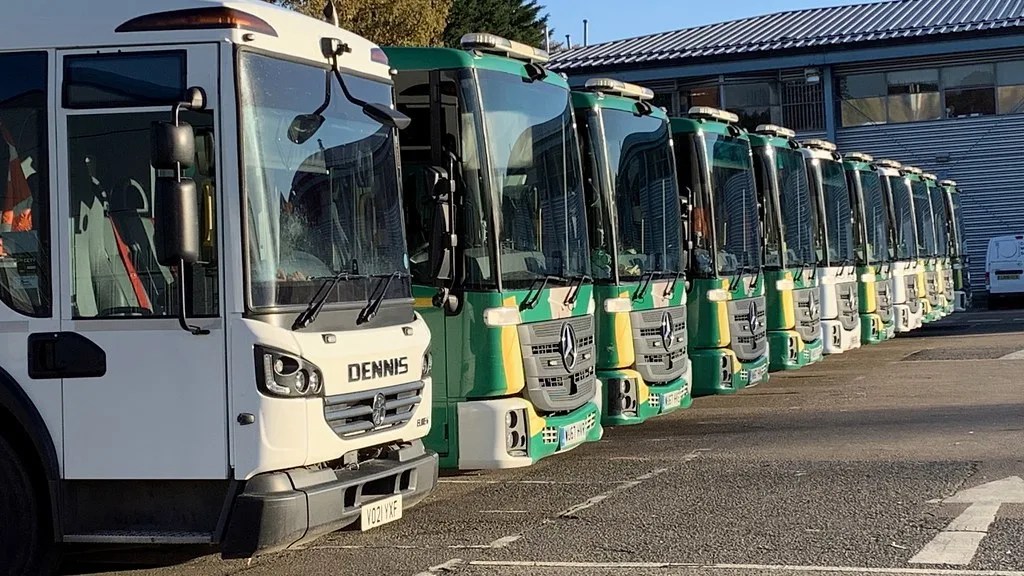
The council does not own the lorries. Biffa Municipal does, and has since the contract was let in 2019. That is the part officers now want to change, and it is the reason the report runs to a £9m line in the capital programme.
Why the decision is happening now
The current waste collection and street cleansing contract was let for eight years, with an option to extend for eight more. The initial term ends on 31 October 2027.
Biffa’s vehicles reach the end of their working life at the same moment. Somebody has to buy new ones, and whoever buys them is locked in for the length of the next contract. (Recycling and waste collection and street cleansing services contract arrangements from 1 November 2027)
Except that Waverley will not exist by then. The borough is abolished on 1 April 2027 and replaced by West Surrey Council. So officers have negotiated a break clause at the end of year four, in October 2031, to let the new authority make its own decision without paying to get out.
That break clause is why the fleet question matters. If Biffa owned the lorries and the break were exercised, the report puts the settlement at £6m to £7m, covering the outstanding balance, the finance on it and the margin on the contract revenue. If the council owns them, that bill disappears.
Waverley is not alone in this. The report notes that Woking, Surrey Heath, Spelthorne and Elmbridge are all procuring waste contracts now, and will include a similar four-year break.
What it costs
The current contract budget is £7,025,000 a year. Every option modelled costs more than that.
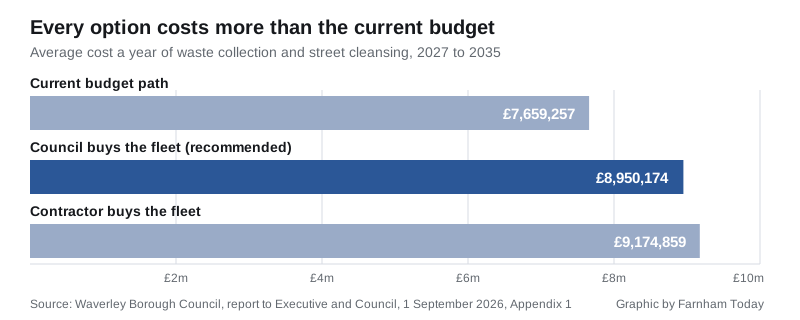
Over the eight years of the extension, the appraisal compares three paths. (Appendix 1, comparison of purchase of fleet versus fleet owned by contractor)
| Eight-year total | Average a year | |
|---|---|---|
| Current budget path | £61,274,056 | £7,659,257 |
| Council buys the fleet | £71,601,395 | £8,950,174 |
| Contractor buys the fleet | £73,398,870 | £9,174,859 |
In plain terms, the council needs about £1.29 million a year of extra budget if it buys the vehicles, against about £1.52 million a year if Biffa does. Buying does not avoid the increase. It makes the increase smaller.
The saving from ownership is roughly £225,000 a year, or £1.8 million across the contract. Officers are candid that this is thin against the money going in, calling it “relatively modest when compared to the scale of the investment, equating to approximately 2.6% per annum”. The case is sensitive to borrowing rates, which is fair warning: the purchase would be funded by Public Works Loan Board borrowing.
Ownership is also worse before it is better. The report says the council pays more than the contractor option in years one and two, with savings emerging from year three, because of repayment and interest costs up front.
Two things could improve the picture and are not in the model. The appraisal assumes the lorries are worth nothing at the end, which is prudent rather than likely. And Extended Producer Responsibility money, which shifts packaging costs onto producers, could be put towards the vehicles and cut the borrowing.
Street cleansing gets rewritten
Buried in the recommendations is a change residents may notice sooner than any of the above. The council wants authority to agree a revised street cleansing specification.
The reason given is direct. The current specification was agreed eight years ago “and it is now not meeting the standards required in town centres and high footfall areas”. Schedules, cleanliness levels and how staff are deployed at peak times all fall short of demand.
The report does not say what the new specification would contain, or what it would cost. That is delegated to the Joint Strategic Director for Housing and Communities, in consultation with the portfolio holder.
What is not changing
- The model stays outsourced. Insourcing was considered and rejected as high risk, because it normally takes 18 to 24 months and would not align with the four-year break.
- No council staff are affected. The report records no direct staffing implications.
- The fleet will not be electric. The current depot “is not large enough to support the infrastructure needed for a fully electric fleet”.
- Your bins have not changed yet. Simpler Recycling, the Deposit Return Scheme and digital waste tracking are all named as legislation still to be worked through, and the report says the processing routes are not currently able to meet everything a collection authority needs.
What happens next
- Tuesday 1 September, 7pm: the Executive meets at the Council Offices, The Burys, Godalming
- Tuesday 8 September, 7pm: full Council is asked to add £9m to the capital programme
- Tuesday 15 September: the West Surrey Shadow Executive is asked for consent under the section 24 direction
That last step is not a formality. The direction requires Guildford, Runnymede, Surrey Heath and Waverley to get written consent before entering certain contracts, so that the incoming unitary is “in the best possible financial position on vesting day”. None of the three decisions take effect unless all three are made.
What it means for you
Nothing changes at your kerb before November 2027, and the report gives no indication that collection frequencies are being altered as part of this. If you want the current arrangements, our Farnham bin collection days page has the rounds, what goes in each bin and the bank holiday position.
What does change is the bill. Waste and street cleansing is one of the largest single things the borough buys, and it is going up by something over a million pounds a year at the point when the borough itself disappears. The £9m for lorries is capital spending, funded by borrowing, and the repayments sit inside those annual figures.
Farnham’s share of a Waverley band D bill in 2026/27 is £220.25, and 2026/27 is the last year Waverley sets one. The decisions taken on 1 September are, in effect, decisions about West Surrey Council’s budget rather than Waverley’s. Our council tax page sets out how the current bill is put together.
Papers for the meeting, including the full report and the financial appendix, are published on the council’s website.
Have your say