
Surrey's Police and Crime Panel questioned the force's use of AI, from live facial recognition to Microsoft Copilot, on 26 November. Training was a key concern.
Surrey Police, which polices Farnham and the rest of the county, is already using artificial intelligence (AI) for live facial recognition, redacting video and text, forecasting demand and running Microsoft Copilot. On Thursday 26 November the Surrey Police and Crime Panel questioned the Deputy Police and Crime Commissioner, Ellie Vesey-Thompson, and senior officers from her office on how that use is kept in check.
Overview
- What: a public meeting of the Surrey Police and Crime Panel, at Woodhatch Place in Reigate, on the force’s use of AI.
- What is in use: operational live facial recognition, automated video and text redaction, demand forecasting and Microsoft Copilot.
- Being tried: speech-to-text transcription, and early work on an “AI agent” for crime data integrity.
- What the panel pressed on: safeguards, staff training, and telling residents when AI has been used in what they are sent.
What Surrey Police uses AI for
The panel looked at a report on how Surrey Police, working jointly with Sussex Police, is using AI in both operational and administrative policing, according to the panel’s release.
The technologies in use are operational live facial recognition, automated video and text redaction, demand forecasting and Microsoft Copilot. Pilots are under way for speech-to-text transcription, and there is exploratory work on an “AI agent” for crime data integrity.
The panel’s questions followed recent national controversies over police AI use in other forces, and an October 2026 warning from the Independent Office for Police Conduct (IOPC) that officers risk “accidental” misconduct without clear rules.
The four questions put to the commissioner’s office
Panel members questioned the Deputy Commissioner and senior officers from the Office of the Police and Crime Commissioner (OPCC) on four areas:
- Evidence and data breaches: making sure officers stick to bans on using generative AI to draft witness statements, and that personal or sensitive law enforcement data is not entered into Copilot.
- Training and monitoring: what active checks and training are in place so officers understand where the boundaries lie.
- Telling the public: making sure residents are clearly told whenever AI has been used to produce communications or documents sent to them.
- Resilience and ethics: learning from recent outside IT outages, and keeping human judgement central to every policing decision.
What the panel chair said
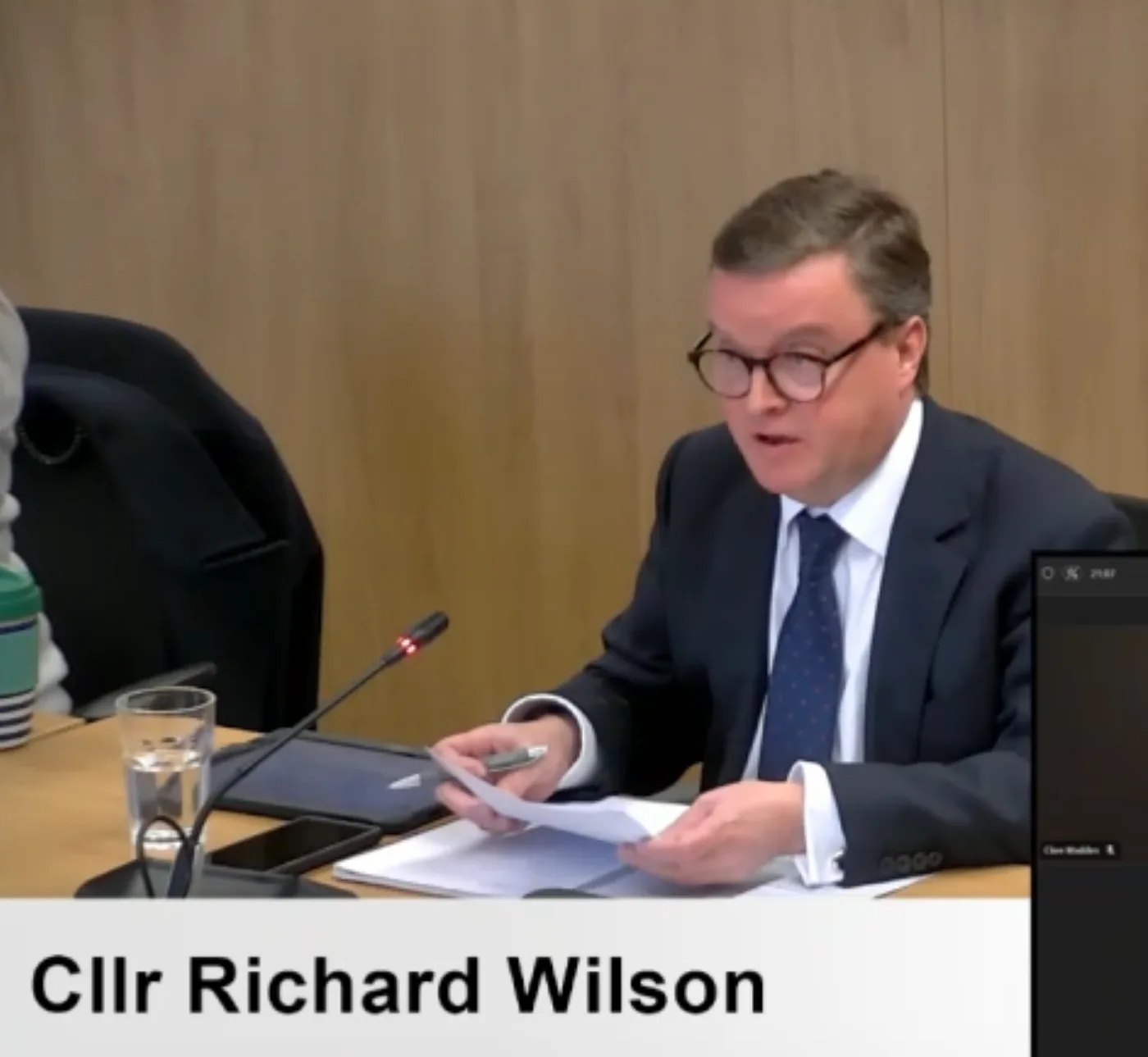
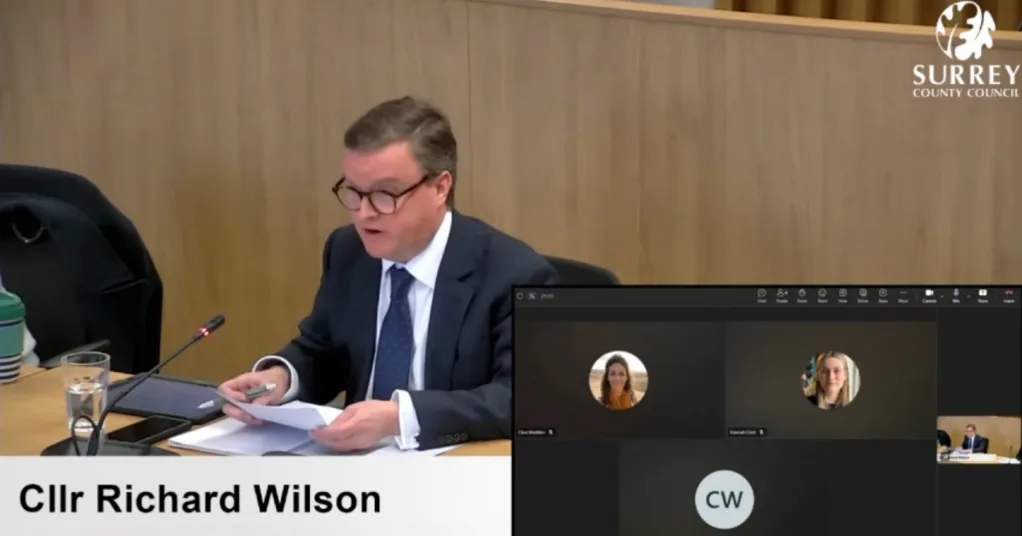
Councillor Richard Wilson, who chairs the panel, said:
“Artificial Intelligence offers real opportunities to cut administrative backlogs and free up officers for frontline policing in Surrey. However, with technology moving at pace, and following national warnings about the risks of inappropriate AI use, public confidence depends on strict human oversight, robust training, and total transparency.
“The Panel sought clear assurances from the Deputy Commissioner that Surrey Police has strong, practical guardrails in place, not just policies on paper, so that AI is used lawfully, ethically, and accurately.”
Cllr Wilson sits on the panel for Surrey Heath Borough Council, which appointed him in 2023, and he was elected its chair in June 2026.
Also on the agenda
The panel also reviewed progress against the 2025 to 2028 Police and Crime Plan, and looked at the Surrey Police Group’s mid-year financial position.
The Surrey Police and Crime Panel is a joint committee of Surrey’s 12 local authorities plus two independent co-opted members. Only one co-opted member is in place at present, and the second seat is being advertised. The panel’s job is to scrutinise and challenge the work of the Police and Crime Commissioner for Surrey.
Watch the meeting
A recording of the webcast is on Surrey County Council’s webcasting site, and the agenda and report are on the council’s meeting page.
Source: Surrey Police and Crime Panel.
Have your say