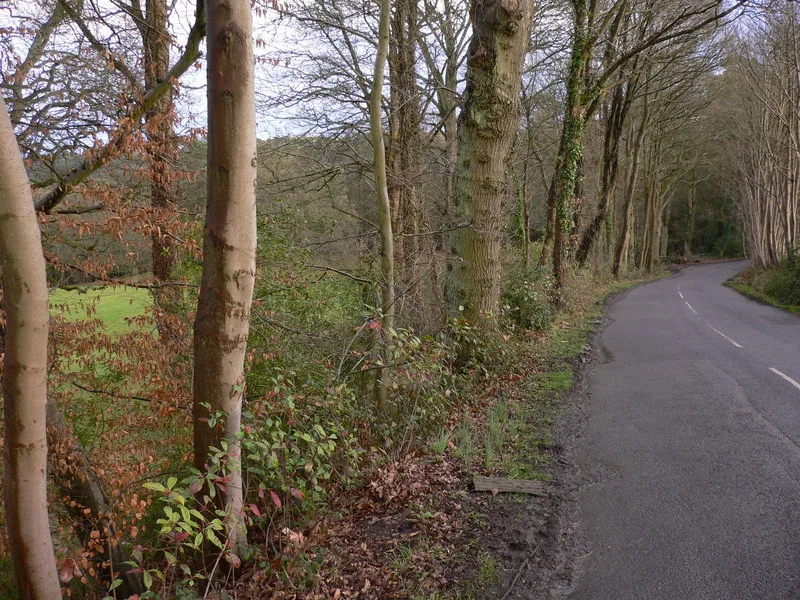

An inspector has approved four homes at Quarry House, Lower Bourne, after councillors refused them 6 to 5, and ordered Waverley to pay the full appeal costs.
Four new homes can be built at Quarry House on Gardeners Hill Road, Lower Bourne, after a government planning inspector overturned Waverley Borough Council’s refusal. The inspector also ordered the council to pay the developer’s full costs of the appeal.
The inspector found the council’s case “vague” and “unsupported by objective analysis”. Councillors had refused the scheme by a single vote, against the advice of their own planning officers.
The decision is reported to Waverley’s planning committee next Wednesday, 30 September, in its list of recent appeal decisions.
What was approved
The scheme replaces a detached single-storey house, its garage and several outbuildings with four homes. They will have air source heat pumps, solar panels, garages and landscaping.
The site sits just outside Farnham’s settlement boundary, on the edge of Lower Bourne. That puts it in what planning policy calls “countryside beyond the Green Belt”, rather than in the Green Belt itself.
The permission has 17 conditions and must be started within three years of 24 July 2026. The conditions cover drainage, archaeology, invasive plants, trees and a construction management plan.
How the council refused it
Planning officers recommended approval. Their committee report recorded 27 letters of objection from 23 people. Farnham Town Council also objected. Surrey County Council, as highway authority, withdrew its objection once the developer agreed to pay £10,000 towards road improvements.
At the planning committee on 1 October 2025, the minutes record two votes:
- the officers’ recommendation to approve fell, 5 in favour and 6 against
- a motion to refuse, proposed by Cllr David Beaman and seconded by Cllr Carole Cockburn, passed 6 votes to 5
The reason given was that future residents would have to “rely on car journeys to access shops, services and facilities”. The council called it “an unsustainable location”.
What the inspector found
The inspector, C Walker, visited the site on 21 July and allowed the appeal three days later. The decision letter sets out the distances the council did not dispute:
- about 1.6km to the centre of Rowledge, with a primary school, village hall, pub, shops, post office and buses
- a similar distance to Wrecclesham’s shops and school
- about 2.8km to Farnham town centre and the railway station
- about 470m to the bus stops on Boundstone Road
The developer’s legal agreement funds two changes on the lane. The “virtual footway”, a white line marking space for walkers, will be extended past the site. So will the 30mph speed limit. The inspector said this would give residents “a feasible alternative to the private car” in daylight, and benefit neighbours as well.
The council had also leaned on the Department for Transport’s Connectivity Tool, which gave the site a score of 38. The inspector gave that “only limited weight”, because little was said about how the score was worked out.
The inspector pointed to two earlier permissions nearby that the council had granted: two homes between 26 and 28 Gardeners Hill Road, and one at Frensham Vale.
Why the council has to pay
Each side in an appeal normally pays its own costs. An inspector can order one side to pay the other’s where it has behaved unreasonably.
The costs decision found that the council’s refusal was “not properly substantiated”. It said:
- no policy was produced to show that homes on the edge of Farnham were inappropriate
- the council offered no evidence against the highway authority, which had accepted the road improvements
- the council’s statement of case “lacks substance”
- “the committee minutes offer very little enlightenment on the Council’s stance”
The inspector concluded the appeal “was unnecessary” and made a full award. The sum is not published. It will be agreed between the two sides, or assessed in the Senior Courts Costs Office if they cannot agree.
The 1.28-year problem
The decision letter also records that Waverley “can only demonstrate a 1.28 year supply of housing land”. The government expects councils to show five years’ worth. The inspector called it a “significant shortfall” and an “urgent and pressing need for housing in the borough”.
A shortfall like that makes refusals harder to defend at appeal. In this case the inspector did not need to rely on it, having found no conflict with the local plan at all.
It matters for what comes next on Gardeners Hill Road. The council’s new list of land put forward for housing includes Hill Fields, Gardeners Hill Road, rated green, with room for 40 homes.
What it means for you
- If you live nearby: the four homes now have full permission. The developer must agree drainage, archaeology and construction details with the council before work starts.
- If you walk the lane: the virtual footway and the 30mph limit are due to be extended past the site, paid for by the developer. The inspector noted the route is not fully lit.
- If you pay council tax in Waverley: the appeal costs come out of the council’s budget. The amount has not been published.
- Want to follow planning in Farnham? Our Farnham planning explainer sets out how to find and comment on applications.
Sources
- Planning Inspectorate appeal decision 6006580, 24 July 2026, for the decision, distances, footway, Connectivity Tool, precedents, conditions and the 1.28-year housing land supply.
- Planning Inspectorate costs decision, 24 July 2026, for the full award and the reasons for it.
- Waverley Borough Council, officers’ report on WA/2025/00281, for the recommendation, objection count, town council view and the £10,000 highways contribution.
- Waverley Planning Committee minutes, 1 October 2025, minute 54, for both votes and the reason for refusal.
- Waverley Planning Committee agenda, 30 September 2026, item 7, appeal decisions.
Have your say